Ceramic Coating
What Is Ceramic Coating And How Does It Actually Work
Ceramic coating is a liquid applied layer that bonds to prepared paint and makes washing easier. Here are its real benefits and its real limits.
- 7 Min Read
- By Vanta Auto Care
Ceramic coating is a liquid applied protective layer that bonds to properly prepared paint and cures into a hard, water repellent film. On a corrected finish it adds gloss, improves chemical resistance and makes the car noticeably easier to wash.
It is not a force field. It will not make paint scratch proof, it will not stop stone chips, and it will not repair defects already in the clear coat. Its value comes from making a well prepared surface easier to keep clean, and from sitting between your paint and everything the road throws at it.
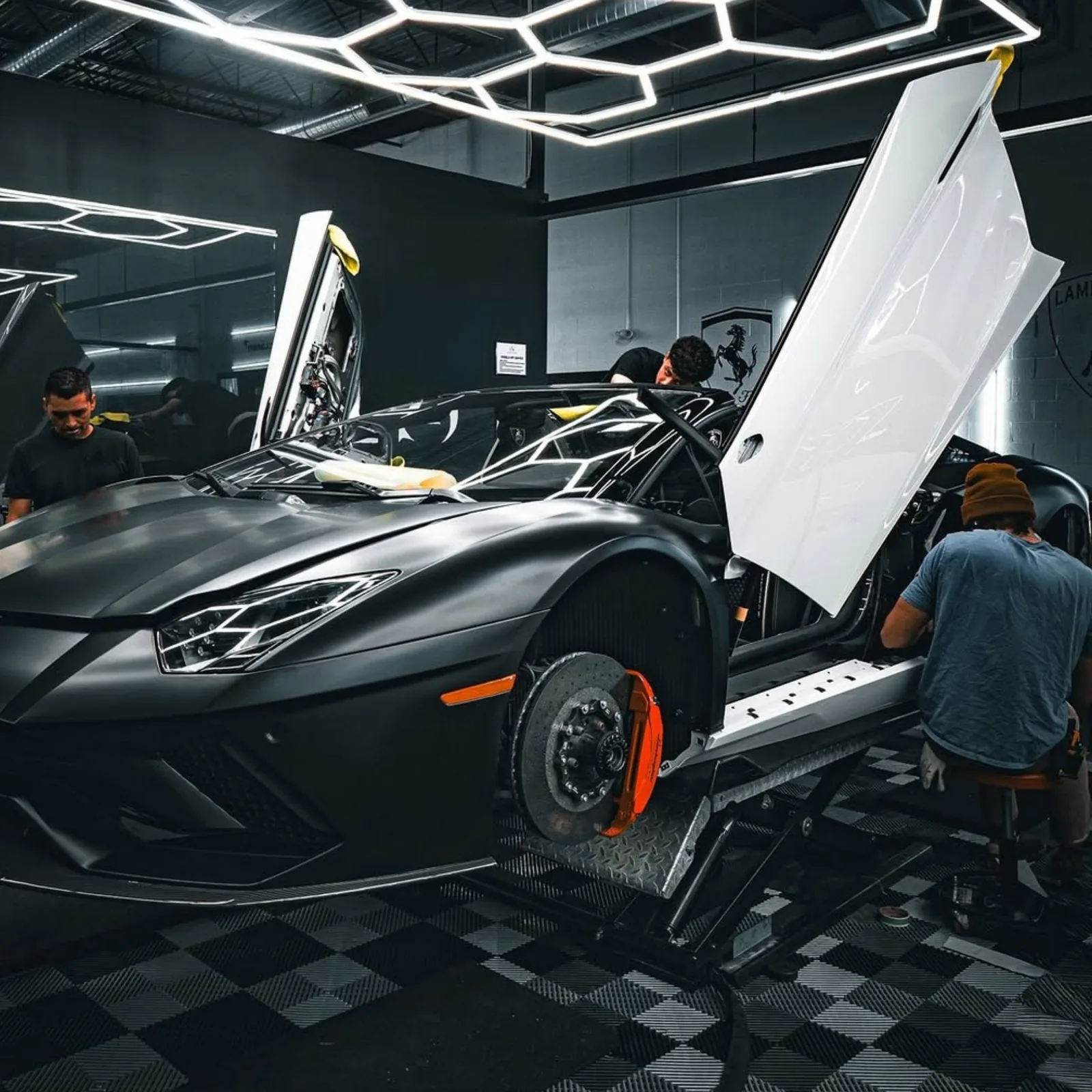
At Vanta Auto Care in Epping the paint is inspected under precision studio lighting, with the lighting and angles set so nothing is missed. That is what decides how much correction is worth doing before any coating goes on.
How Does Ceramic Coating Work
The coating goes on as a thin liquid after the paint has been cleaned, decontaminated and corrected. It spreads across the surface, begins to cure, and forms a bonded film rather than sitting loosely on top the way a wax does.
Chemistry varies between products. Many automotive coatings are silicon based, but the word ceramic covers a wide range of formulations with different application methods and different performance. Preparation and the installer matter far more than any number printed on a bottle.
Once cured, the coating lowers the surface energy of the paint. Water and contamination cling less readily, which is why grime releases more easily during a proper wash. The car still gets dirty, and hard water left to dry on a panel can still leave mineral deposits.
What Are The Practical Benefits
Easier Routine Cleaning
Traffic film, bug residue and general road grime release more readily from a maintained coating. You still wash the car, but washing becomes faster and more predictable, and you stop scrubbing at things.
Chemical And Environmental Resistance
A coating gives useful resistance to bird dropping residue, bug contamination and UV within the product's limits. Prompt removal still matters. A coating can be etched or contaminated itself if something acidic is left to bake on a panel in a Melbourne summer.
Gloss And Clarity
Coatings add slickness and depth, but most of the visual transformation comes from the paint underneath. A coating locks in a corrected finish. It does not hide deep scratches or bring back failed clear coat.
A Longer Service Life Than Wax
Professional coatings are designed to last considerably longer than a wax or a spray sealant. How much longer depends on exposure, kilometres, washing, storage and how well the surface was prepared in the first place.
What Ceramic Coating Does Not Protect Against
Being straight about this is more useful than selling it. A coating will not reliably prevent:
- stone chips and road impact damage
- scratches from keys, branches or automatic brush washes
- dents or collision damage
- swirl marks already sitting in the paint beneath it
- water spots when mineral rich droplets dry on the surface
- permanent damage from contamination left on the paint too long
- clear coat failure, rust or poor previous repairs
For physical impact protection, paint protection film is the relevant product. Film across the front end with a coating over the whole car covers both problems properly.
Why Preparation Matters So Much
A coating bonds to whatever surface exists on application day. Oils, wax, bonded contamination and polishing residue all interfere with that bond, and any swirl left in the paint stays visible under a clear layer for years.
Good preparation runs in this order:
- 01safe wash and detailed cleaning of every shut, sill and edge
- 02chemical decontamination for iron fallout and tar
- 03mechanical decontamination where the paint still feels rough
- 04paint inspection under precision lighting
- 05machine correction matched to what the paint actually needs
- 06panel wipe to strip polishing oils back to bare paint
- 07coating application and a controlled cure inside the studio
Not every car needs the same amount of polishing. A well kept vehicle may only need cleaning and preparation. A marked car benefits from correction if you want those defects gone rather than sealed in.
How Long Does A Ceramic Coating Last
There is no universal lifespan. Products are marketed with figures ranging from months to many years, and those numbers assume ideal preparation, ideal conditions and ideal maintenance. The written product documentation is what matters, not the headline.
A coating can still be present while its water behaviour changes, simply because the surface is contaminated. Wash the car properly and assess it again before assuming anything has failed.
Do You Still Wash A Coated Car
Yes. Coatings reduce the effort, they do not remove the job. Safe washing lifts off traffic film and contamination that would otherwise mask how the coating is behaving and, left long enough, damage the surface.
Two buckets, a clean mitt, a pH neutral shampoo and top to bottom. Stay out of automatic brush washes entirely: they will mar a coated finish just as they mar bare paint.
Is Ceramic Coating Worth It
It is worth it if you want easier washing, better surface behaviour and protection that outlasts a wax, and you are still going to look after the car. It is poor value if you are expecting scratch immunity or you never intend to wash it.
Age matters less than paint condition, how long you are keeping the car, where it parks and what you actually expect. Send Vanta the make, model and a few photos of the paint and you will get a straight answer about whether it is worth doing on your car.
Next Step
Get A Quote For Your Car
Tell Dylan the make, model and what you want out of it, and you will get a quote built around the car rather than a price band. $500 Off All Ceramic Coating Packages when you enquire.